
How to Make Your Car Battery Last Longer: 6 Tips Every Driver Should Know
Imagine heading out for work on a chilly New Jersey morning, only to discover that your Mazda won't start. A weak or discharged battery can turn an ordinary day into a frustrating experience, especially when you have somewhere important to be.
Your
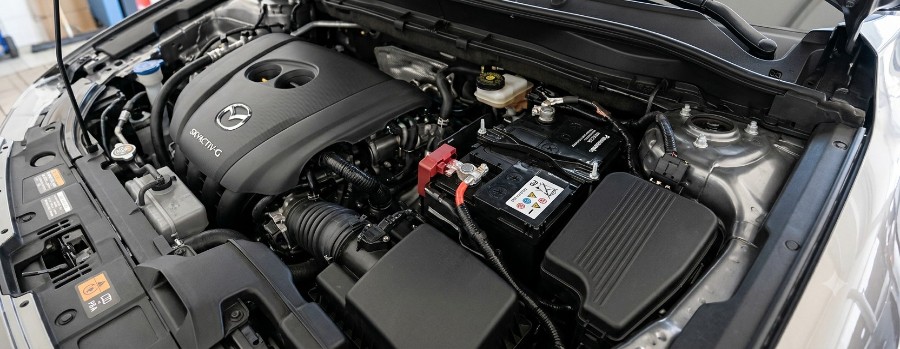
vehicle's battery does more than start the engine. It also supplies electricity
to essential systems and accessories, helping your vehicle operate as intended.
However, batteries gradually lose their ability to hold a charge, and everyday
driving habits can influence how quickly that happens.
For
motorists in Shrewsbury and throughout Monmouth County, changing seasonal
temperatures can make battery care particularly important. Heat can accelerate
battery wear, while freezing conditions can make it harder for an aging battery
to start the engine.
The good
news? A little preventive maintenance can help you identify potential problems
before they leave you stranded. Here are six practical ways to care for your
car battery and support reliable performance throughout the year.
1. Pay Attention to Your Battery's Condition
Car
batteries rarely last forever, but recognizing deterioration early can help you
plan for a replacement before the battery fails completely.
Although
some problems require professional testing to identify, there are several
warning signs worth watching. Corrosion around the terminals, loose
connections, damaged cables, and visible cracks or swelling may indicate that
your battery needs attention. You should also notice how your vehicle behaves
when you start it.
Does the
engine take longer than usual to turn over? Do you occasionally hear clicking
when pressing the start button? These symptoms can point to a weak battery,
although other starting-system problems may produce similar effects.
Most
conventional car batteries have an approximate lifespan of three to five years.
Actual longevity varies depending on the battery type, vehicle usage,
maintenance, and operating conditions.
How to
protect your battery: Include battery testing in your regular maintenance routine, especially
as the battery gets older. If you notice persistent starting difficulties,
arrange an inspection instead of waiting for a complete failure.
Never
attempt to handle a battery that appears swollen, cracked, or leaking. Seek
professional assistance to address the problem safely.
2. Think About How You Use Your Vehicle
Your
daily driving routine can have a greater effect on battery health than you
might expect.
Whenever
you start your Mazda, the battery supplies the necessary electrical energy to
operate the starting system. The alternator then helps replenish the charge
while the engine runs. However, repeated short journeys may not provide enough
running time to replace all the energy consumed during frequent starts.
This can
be particularly relevant if most of your driving involves quick trips around
Shrewsbury, nearby shopping areas, or other local destinations.
You can
help minimize unnecessary battery strain by making a few adjustments:
·
Combine errands when practical instead of making several separate trips.
·
Avoid repeatedly starting the engine when it isn't necessary.
·
Consider an appropriate battery maintainer if you plan to leave your
vehicle unused for an extended period.
·
Schedule a battery and charging-system inspection if you regularly
experience low battery power.
Keep in
mind that taking a longer drive is not a guaranteed fix for a battery that
keeps losing its charge. If the problem persists, the battery or charging
system may require professional attention.
3. Prepare for New Jersey's Seasonal
Temperature Changes
Weather
conditions can significantly influence how well a car battery performs.
During
summer, high temperatures can accelerate the chemical processes that contribute
to battery deterioration. When winter arrives, the battery may have less
available power to start the engine, while the engine itself can require more
effort to turn over.
For
drivers in Shrewsbury and the surrounding Jersey Shore communities, preparing
for seasonal changes can help reduce the likelihood of cold-weather starting
problems.
Before
temperatures drop, consider taking these precautions:
·
Have your battery condition evaluated before winter begins.
·
Ask a technician to inspect the battery terminals and electrical
connections.
·
Address sluggish starting before colder weather arrives.
·
Park in a garage or sheltered location when possible.
·
Follow the maintenance recommendations outlined in your vehicle's
owner's manual.
An older
battery might perform adequately during mild weather but struggle when
temperatures fall sharply. Identifying reduced battery capacity ahead of time
gives you an opportunity to address the problem before an inconvenient
breakdown.
Preventive
testing is particularly worthwhile if your vehicle has already shown signs of a
weakening battery.
4. Be Mindful of What Uses Electricity When
Your Car Is Off
Even
when your vehicle isn't running, certain electrical components may continue
drawing small amounts of power. This is normal for many modern vehicles, but
excessive electrical consumption can leave the battery without enough charge to
start the engine.
Some
causes are easy to overlook. Interior lights left on, accessories connected to
the vehicle, or electrical faults can gradually drain the battery while the car
is parked.
A few
simple precautions can help reduce unnecessary power consumption:
·
Double-check that the headlights and interior lights are switched off
when appropriate.
·
Avoid leaving the infotainment system or other electrical accessories
running for extended periods with the engine off.
·
Check that the doors and trunk are completely closed.
·
Review the power requirements of any aftermarket accessories.
·
Investigate recurring battery discharge rather than relying on repeated
jump-starts.
If your
Mazda starts normally one evening but won't start the following morning,
excessive battery drain could be one possible explanation.
However,
an aging battery may also struggle to retain sufficient charge. A technician
can test the battery and electrical system to determine whether the problem
involves normal battery deterioration, excessive electrical consumption, or
another fault.
5. Learn to Recognize the Early Symptoms of
Battery Failure
A
battery that is nearing the end of its useful life may produce several
noticeable symptoms. Knowing what to look for can help you arrange service
before the problem becomes more serious.
Here are
some common warning signs and what they could mean:
|
Warning Sign
|
What It Could Indicate
|
|
Engine starts
more slowly than usual
|
The battery may not be
supplying sufficient starting power.
|
|
Clicking
sound when attempting to start
|
The battery may be weak,
or the starting system may have a fault.
|
|
Headlights
appear unusually dim
|
The battery or charging
system may require inspection.
|
|
Battery or
charging-system warning light illuminates
|
A problem with the
charging system or related components may be present.
|
|
Electrical
features behave inconsistently
|
An electrical fault, weak
battery, or connection issue could be responsible.
|
|
Vehicle
requires frequent jump-starts
|
The battery may be
deteriorating or losing charge unexpectedly.
|
Remember
that these symptoms are not definitive proof that your battery needs
replacement. A malfunctioning alternator, starter motor, electrical connection,
or other component can cause similar problems.
Rather
than guessing at the cause, arrange professional testing to establish whether
the battery is still performing properly and whether the charging system is
functioning as intended.
If you
notice a swollen battery case, visible cracks, or leaking fluid, avoid touching
the battery and seek professional assistance.
6. Make Battery Checks Part of Your Regular
Service
Waiting
until your vehicle refuses to start is not the best way to manage battery
maintenance. Periodic inspections can help identify declining performance and
other problems before they disrupt your plans.
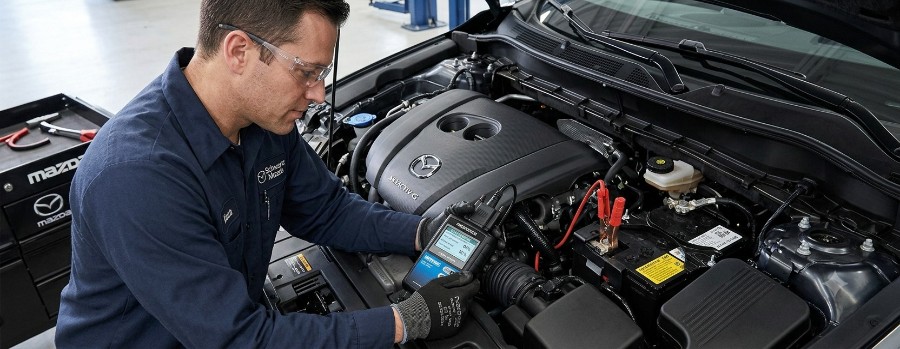
A proper
assessment should consider more than the battery alone. The charging system,
electrical connections, and starting components all contribute to reliable
operation.
Depending
on your vehicle's symptoms and maintenance needs, an inspection may involve:
·
Measuring battery condition and starting performance.
·
Examining the terminals and cables for corrosion or damage.
·
Checking the battery housing for visible signs of deterioration.
·
Evaluating alternator output and charging-system performance.
·
Investigating unexplained or repeated battery discharge.
If
testing shows that replacement is necessary, select a battery that meets your
Mazda's specific requirements. Battery dimensions, capacity, and other
specifications can differ between models.
Certain
modern Mazda vehicles may also require specific battery-monitoring-system
procedures after installation. Following the manufacturer's recommendations
helps ensure the replacement is appropriate for your vehicle.
For
drivers in Shrewsbury, Schwartz Mazda is located at 585 Shrewsbury Ave,
Shrewsbury, NJ 07702. Contact the dealership to learn about available
maintenance services if your vehicle is experiencing battery-related concerns.
Stay Ready for Every Drive with Schwartz
Mazda
A
healthy battery helps keep your everyday plans on track, whether you're
commuting through Monmouth County, running errands around Shrewsbury, or
preparing for a seasonal road trip.
Although
battery wear is unavoidable, regular inspections and sensible driving habits
can help you identify problems early. Monitoring starting performance,
minimizing unnecessary electrical drain, and preparing for temperature changes
are all worthwhile steps toward more dependable vehicle operation.
If your
Mazda is taking longer to start, repeatedly losing its charge, or displaying a
battery-related warning light, don't ignore the symptoms. Identifying the
underlying issue early may help you avoid an unexpected breakdown.
Need help with a battery concern? Contact Schwartz Mazda at 585 Shrewsbury Ave, Shrewsbury, NJ 07702, to explore available maintenance services and find out whether your vehicle needs a battery inspection or replacement.